February is the sweet spot of the southern hemisphere summer and the cleanest stretch of the Indian Ocean dry season. Bali finishes its wet weeks early in the month and settles into hot, blue mornings. Mauritius and the Seychelles are between cyclone risks, statistically the calmer half of their season. The Canary Islands run a steady 22 to 25 C, which is summer compared to mainland Europe and just right for long beach walks without melting.
Why February works
The Indian Ocean sits at 28 to 29 C around Mauritius and Zanzibar. Bali coastal areas average 31 C daytime with brief, late afternoon showers that clear in twenty minutes. The Canary Islands run cooler at 22 C air, 19 C water on the western islands. Seychelles air temperatures barely move, hovering at 30 C year-round, but February brings the lowest humidity of the season.
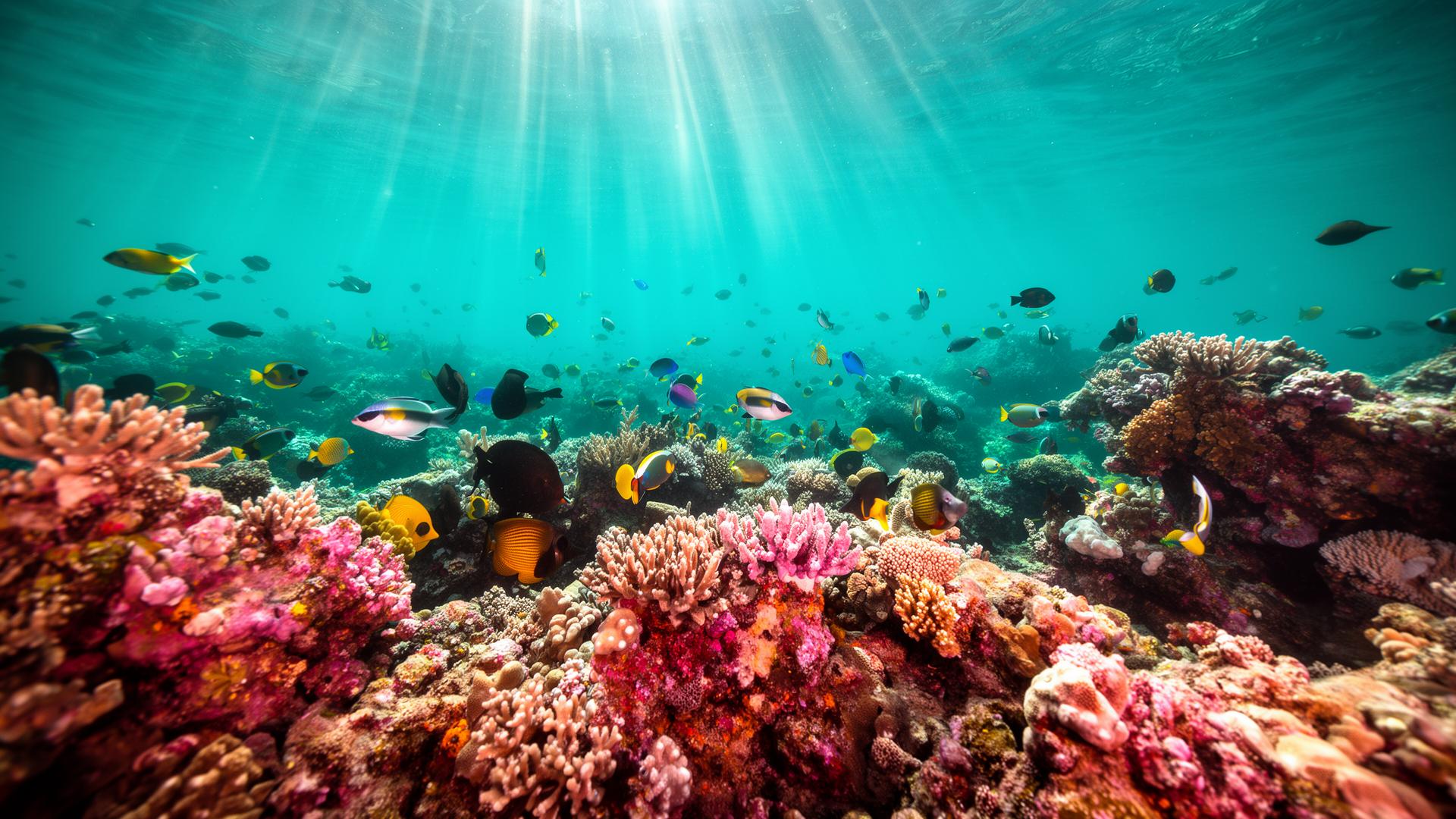
Bali's east coast, especially around Sanur and Amed, has glassy mornings ideal for snorkeling. Mauritius lagoons protected by the reef stay perfectly flat at Belle Mare and Trou aux Biches. The Seychelles inner islands, Mahe and Praslin, have water clear enough that you can spot stingrays from the beach. Canary swells are bigger on the western coasts, calmer on the southern bays of Fuerteventura and Gran Canaria.
The five destinations we keep returning to
Bali, Indonesia
Uluwatu for surf and cliffs, Sanur for calm water, Ubud inland. Daytime temperatures average around 31 C / 88 F. The water sits warm enough that the first swim of the morning feels like an unhurried decision rather than a brave one. Locals fall into a daily rhythm around the sun: early walk, late breakfast, long swim, slower lunch, quiet hour, second swim, sunset somewhere with a view.
The reason Bali works in February comes down to geography. The prevailing wind pattern keeps humidity in check, the sea has had enough time to either warm up or stay warm, and the local tourism rhythm is either at its considered peak or in a friendly shoulder. Either way, restaurants are open, transport is running, and accommodation has enough choice that you do not need to compromise.
Mauritius, Indian Ocean
Le Morne, Belle Mare, Tamarin. Reef-protected lagoons everywhere. Daytime temperatures average around 30 C / 86 F. The water sits warm enough that the first swim of the morning feels like an unhurried decision rather than a brave one. Locals fall into a daily rhythm around the sun: early walk, late breakfast, long swim, slower lunch, quiet hour, second swim, sunset somewhere with a view.
The reason Mauritius works in February comes down to geography. The prevailing wind pattern keeps humidity in check, the sea has had enough time to either warm up or stay warm, and the local tourism rhythm is either at its considered peak or in a friendly shoulder. Either way, restaurants are open, transport is running, and accommodation has enough choice that you do not need to compromise.
Canary Islands, Spain
Fuerteventura's Corralejo dunes, La Graciosa for quiet. Daytime temperatures average around 22 C / 72 F. The water sits warm enough that the first swim of the morning feels like an unhurried decision rather than a brave one. Locals fall into a daily rhythm around the sun: early walk, late breakfast, long swim, slower lunch, quiet hour, second swim, sunset somewhere with a view.
The reason Canary Islands works in February comes down to geography. The prevailing wind pattern keeps humidity in check, the sea has had enough time to either warm up or stay warm, and the local tourism rhythm is either at its considered peak or in a friendly shoulder. Either way, restaurants are open, transport is running, and accommodation has enough choice that you do not need to compromise.
Seychelles, Indian Ocean
Anse Source d'Argent on La Digue. Granite boulders, turquoise water. Daytime temperatures average around 30 C / 86 F. The water sits warm enough that the first swim of the morning feels like an unhurried decision rather than a brave one. Locals fall into a daily rhythm around the sun: early walk, late breakfast, long swim, slower lunch, quiet hour, second swim, sunset somewhere with a view.
The reason Seychelles works in February comes down to geography. The prevailing wind pattern keeps humidity in check, the sea has had enough time to either warm up or stay warm, and the local tourism rhythm is either at its considered peak or in a friendly shoulder. Either way, restaurants are open, transport is running, and accommodation has enough choice that you do not need to compromise.
Zanzibar, Tanzania
Nungwi and Kendwa in the north stay swimmable at low tide. Daytime temperatures average around 32 C / 90 F. The water sits warm enough that the first swim of the morning feels like an unhurried decision rather than a brave one. Locals fall into a daily rhythm around the sun: early walk, late breakfast, long swim, slower lunch, quiet hour, second swim, sunset somewhere with a view.
The reason Zanzibar works in February comes down to geography. The prevailing wind pattern keeps humidity in check, the sea has had enough time to either warm up or stay warm, and the local tourism rhythm is either at its considered peak or in a friendly shoulder. Either way, restaurants are open, transport is running, and accommodation has enough choice that you do not need to compromise.
How to plan it
- In Zanzibar, pay attention to tides. The east coast empties dramatically at low tide. North coast beaches keep their water.
- Bali traffic between Canggu and Uluwatu is rough. Pick one base and explore from there rather than splitting nights.
- Mauritius is small but rental cars unlock the southwest, which is the most cinematic part of the island.
- The Canary Islands have microclimates. Lanzarote in the north is cloudier than the south. Check the side you're staying on.
Where to stay
Bali villas in Bingin, Ulu, or the rice fields above Canggu are the move. Mauritius works either as resort or as small guesthouses near Tamarin and Black River. The Seychelles is realistically a self-catering destination on Mahe or La Digue unless you commit to a private island. In Zanzibar, look at boutique stays in Matemwe and Pongwe rather than the busier Nungwi strip. Canary Islands rentals in the old towns of Corralejo or Puerto del Carmen put you near both the beach and tapas.
Final thoughts
February is the month to spend more time in fewer places. Slow down, swim twice a day, and let the dry season do the work for you.
If you take only one piece of advice from this guide, take this. The best February trip is not the one that ticks the most destinations, it is the one that gives the sun and the water enough time to do what they are good at. Stay longer in fewer places. Eat where the menu is short. Walk barefoot when you can. The chase for summer is rarely about distance, it is about timing, and February is one of those months that pays the patient traveler back in full.